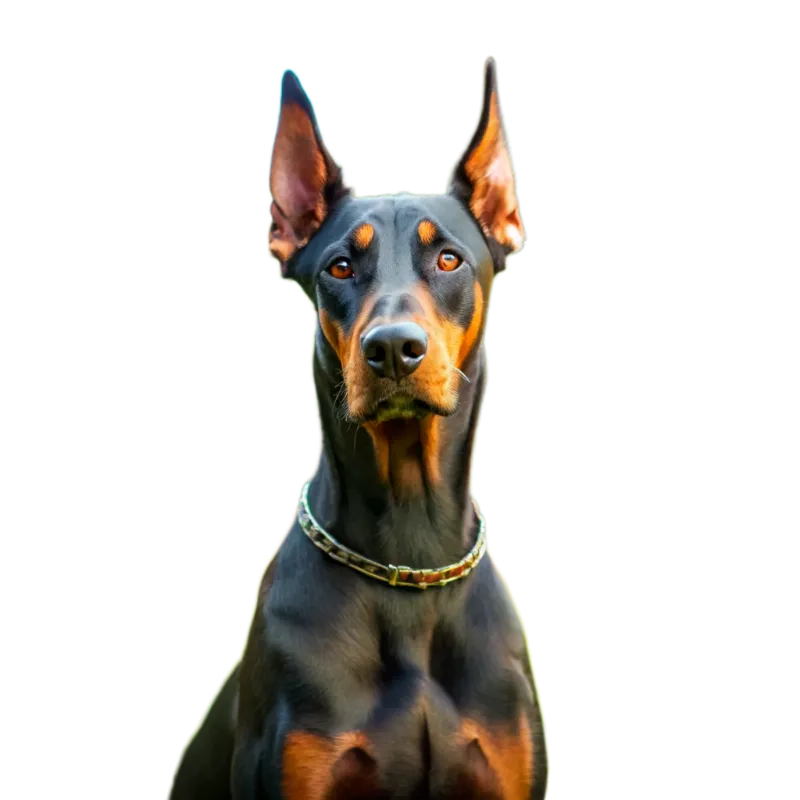
German Pinscher
German Pinscher Summary
 Weight
 Lifespan
 Exercise
 Trainability
 Temperament
 Grooming
Get to Know German Pinschers
- Ancestor Breed: The German Pinscher is the direct ancestor of both the Miniature Pinscher and the Doberman Pinscher.
- Nearly Lost: After World War II, no German Pinscher litters were registered for years. Werner Jung single-handedly revived the breed.
- Rat Catcher: Their original job was catching rats on German farms—a role they took to with impressive speed and determination.
- Not a Doberman: Despite their similar appearance, German Pinschers are a separate, older breed—not a small Doberman.
German Pinscher Personality & Temperament
- Intelligent & Alert: German Pinschers are exceptionally smart dogs that are always aware of their surroundings.
- Spirited & Energetic: They are active, lively dogs that approach life with enthusiasm and intensity.
- Loyal & Protective: They are devoted to their families and make excellent watchdogs with a natural protective instinct.
- Independent & Strong-Willed: They can be stubborn and require a confident owner who provides consistent training and clear leadership.
German Pinscher Care & Grooming
- Exercise: At least 45 to 60 minutes of vigorous daily exercise. Running, agility, barn hunt, and active play are ideal outlets for their energy.
- Grooming: Their short, sleek coat needs only weekly brushing—they are very low-maintenance. Regular nail trims and dental care complete their grooming routine.
- Diet: Feed a high-quality food for active medium-sized breeds. They tend to be lean and athletic. Monitor portions to maintain a fit physique.
- Health: Watch for hip dysplasia, cataracts, von Willebrand's disease, and cardiac issues. Generally a healthy breed with impressive longevity.
What to ask your breeder?
Here's a short summary of what you should be asking your breeder:
German Pinscher Health Testing
| Screening | Considerations |
|---|---|
| ACVO Eye Exam | ACVO Eye Examination. Results registered with OFA. |
| Hip Dysplasia | One of the following: OFA Radiographic Hip Evaluation. PennHIP Evaluation. Results registered with OFA. Recognized Foreign Hip Evaluation. Results registered with OFA. |
| Cardiac Evaluation | Advanced Cardiac Exam - exam must include an ECHO. |
| von Willebrand's Disease | Optional: DNA-based vWD test from an approved lab; results registered with the OFA. |
German Pinscher History
The German Pinscher is a medium-sized German breed that is the prototype of all pinscher breeds. Originating in Germany in the late 1700s, it is the ancestor of both the Miniature Pinscher and the Doberman Pinscher. The breed nearly went extinct after World War II, but West German breeder Werner Jung saved it by smuggling dogs from East Germany. The AKC recognized the breed in 2003. The German Pinscher was originally a versatile farm dog used for ratting, guarding, and companionship.
How Much Does It Cost to Own a German Pinscher Per Year?
Determining the cost of owning a German Pinscher is essential for responsible dog ownership. Use our calculator to estimate expenses, including food, grooming, veterinary care, and more.
The Ultimate Dog Cost Calculator
 Calculate NowSee full German Pinscher cost breakdown
Find German Pinscher Breeders Near You
Connect with trusted Canadian breeders raising German Pinschers.
Find German Pinscher BreedersFrequently Asked Questions About German Pinscher
When you talk to a breeder, you're not just asking “do you have available German Pinscher puppies?” You're looking for a match in the process of rehoming a dog. As a prospective dog owner, you are assessing how predictable the dog's health, temperament, and long-term welfare will be and whether the breeder's practices reduce avoidable risk.
You should engage in a conversation about the following topics:
- Which health tests and genetic screening do you do specifically for German Pinscher, and can I see the results?
- What do you do if a puppy develops a serious genetic condition? What contract, policies and support do you offer as a breeder?
- How are puppies raised from birth to 8+ weeks? Ask about socialization, philosophies on early neurological development, handling, and exposure.
In Canada, German Pinscher puppies from reputable breeders typically cost between $2,200 and $4,800 — but the puppy price is only the beginning.
The real cost of a dog isn't just the puppy price. After year one, the cost of a dog includes the predictable annual costs + the unpredictable “risk costs.” Your goal is to make the cost legible before you commit, as one of the top causes of surrendering a dog is not being able to afford the dog in later years.
To help you assess these costs, Paction has created the Ultimate Cost Calculator. You can also read an article written by a Paction breeder on why a prospective dog owner should focus on the ongoing costs of dog ownership and not “how much” the puppy costs.
For German Pinscher, responsible breeders commonly screen breeding pairs using tests such as ACVO Eye Exam, Hip Dysplasia, Cardiac Evaluation, and von Willebrand's Disease.
Every dog breed has certain health issues that tend to occur more often, but what matters most is how predictable and preventable those risks are. For many breeds, common concerns include inherited conditions (such as orthopedic, eye, or cardiac issues) as well as lifestyle-related challenges like weight management, dental health, skin or ear problems, and anxiety.
Responsible breeders help reduce inherited risk through appropriate health testing, careful selection of breeding pairs, and transparency about family history. To understand more about responsible breeding programs that prioritize health and genetic screening of breeding pairs, check out Making Science Simple: Canine Genetics for Puppy Shoppers.
As an owner, you play an equally important role. Consistent preventive veterinary care, proper exercise and enrichment, healthy nutrition, and early screening can significantly improve long-term health outcomes.
Whether a German Pinscher is right for you depends less on the breed itself and more on how well its typical energy level, temperament, and care needs align with your daily life. Important factors include your schedule and activity level, living environment, household dynamics (such as children, other pets, or allergies), and tolerance for noise or independence. Long-term fit also comes down to maintenance like grooming, training needs, and how often you travel or rely on outside dog care.
Use Paction's Dog Breed Matchmaker and Pup Time Estimator to find out more about what dog is right for you.
If you're thinking about a new dog after losing one, Are You Ready After Loss? is a gentle check-in to help you decide when the time is right.