Bull Terrier
Bull Terrier Summary
 Weight
 Lifespan
 Exercise
 Trainability
 Temperament
 Grooming
Get to Know Bull Terriers
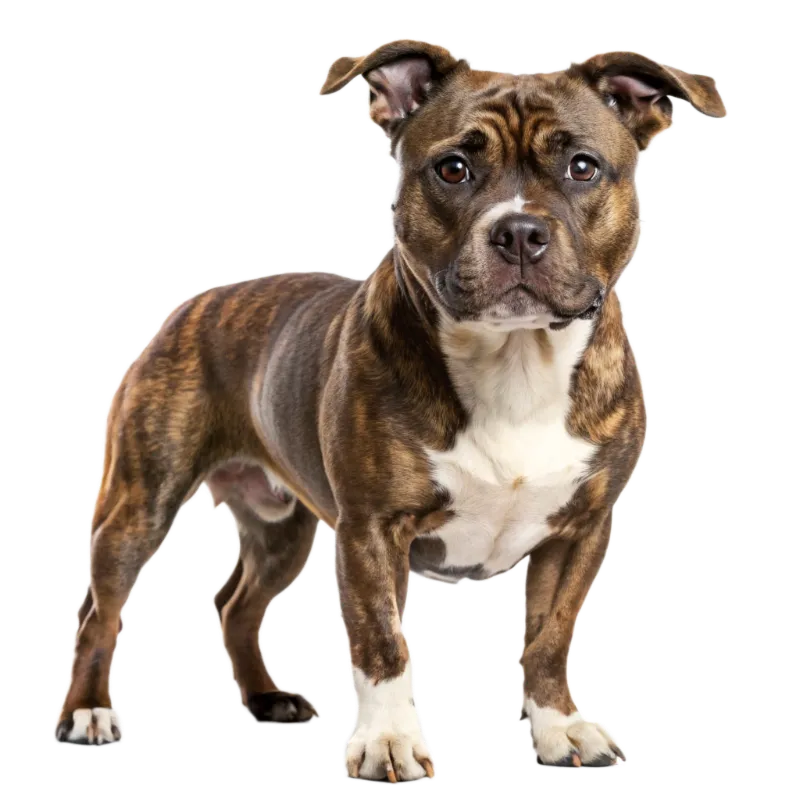
- Distinctive “Egg-Shaped” Head: The Bull Terrier is instantly recognizable for its unique, oval-shaped head and small, triangular eyes. This unusual look is the result of deliberate selective breeding and is unmatched by any other breed.
- Originally Bred for Multiple Roles: Bull Terriers were developed in 19th-century England for bull-baiting and later refined into gentleman’s companions. Over time, breeders focused on temperament, producing a dog that is bold yet affectionate.
- Clownish Personality: Often called the “clown of the dog world,” Bull Terriers are known for their humorous, mischievous behavior. They love to entertain and thrive on interaction with their people.
- Strong & Athletic: Despite their compact build, Bull Terriers are powerful, agile dogs with impressive stamina. They excel in activities that combine strength and problem-solving.
- Deep Family Loyalty: Bull Terriers form intense bonds with their families and prefer being involved in daily life. They do not thrive when left isolated for long periods.
Bull Terrier Personality & Temperament
- Affectionate & People-Oriented: Bull Terriers are extremely devoted to their families and thrive on close human interaction.
- Energetic & Playful: They retain a puppy-like enthusiasm well into adulthood and enjoy games, toys, and active play.
- Independent but Intelligent: They are clever and curious, sometimes testing boundaries, which makes consistent training essential.
Bull Terrier Care & Grooming
- Exercise: Daily walks combined with interactive play or training sessions are necessary to meet their physical and mental needs.
- Training: Early socialization and consistent, reward-based training help channel their strong personality positively.
- Grooming: Weekly brushing keeps the coat clean and helps monitor skin health.
What to ask your breeder?
Here's a short summary of what you should be asking your breeder:
Bull Terrier Health Testing
| Screening | Considerations |
|---|---|
| Patellar Luxation | Veterinary Evaluation of Patellar Luxation. Results registered with OFA. |
| Cardiac Evaluation | Advanced Cardiac Exam |
| Congenital Deafness | B.A.E.R. hearing test. Results registered with OFA. |
| Kidney Disease | OFA Evaluation |
| Lethal Acrodermatitis | DNA Based Lethal Acrodermatitis test, with results registered with the OFA |
Bull Terrier History
The Bull Terrier originated in England during the early 1800s, developed by crossing Bulldogs with various terriers to create a dog that combined strength, agility, and determination. Initially associated with blood sports, the breed was later refined to emphasize companionship and stability. By the late 19th century, Bull Terriers became fashionable companions among English gentlemen. Today, they are valued for their distinctive appearance, playful nature, and unwavering loyalty.
How Much Does It Cost to Own a Bull Terrier Per Year?
Determining the cost of owning a Bull Terrier is essential for responsible dog ownership. Use our calculator to estimate expenses, including food, grooming, veterinary care, and more.
The Ultimate Dog Cost Calculator
 Calculate NowSee full Bull Terrier cost breakdown
Find Bull Terrier Breeders Near You
Connect with trusted Canadian breeders raising Bull Terriers.
Find Bull Terrier BreedersFrequently Asked Questions About Bull Terrier
When you talk to a breeder, you're not just asking “do you have available Bull Terrier puppies?” You're looking for a match in the process of rehoming a dog. As a prospective dog owner, you are assessing how predictable the dog's health, temperament, and long-term welfare will be and whether the breeder's practices reduce avoidable risk.
You should engage in a conversation about the following topics:
- Which health tests and genetic screening do you do specifically for Bull Terrier, and can I see the results?
- What do you do if a puppy develops a serious genetic condition? What contract, policies and support do you offer as a breeder?
- How are puppies raised from birth to 8+ weeks? Ask about socialization, philosophies on early neurological development, handling, and exposure.
In Canada, Bull Terrier puppies from reputable breeders typically cost between $2,200 and $4,700 — but the puppy price is only the beginning.
The real cost of a dog isn't just the puppy price. After year one, the cost of a dog includes the predictable annual costs + the unpredictable “risk costs.” Your goal is to make the cost legible before you commit, as one of the top causes of surrendering a dog is not being able to afford the dog in later years.
To help you assess these costs, Paction has created the Ultimate Cost Calculator. You can also read an article written by a Paction breeder on why a prospective dog owner should focus on the ongoing costs of dog ownership and not “how much” the puppy costs.
For Bull Terrier, responsible breeders commonly screen breeding pairs using tests such as Patellar Luxation, Cardiac Evaluation, Congenital Deafness, and Kidney Disease.
Every dog breed has certain health issues that tend to occur more often, but what matters most is how predictable and preventable those risks are. For many breeds, common concerns include inherited conditions (such as orthopedic, eye, or cardiac issues) as well as lifestyle-related challenges like weight management, dental health, skin or ear problems, and anxiety.
Responsible breeders help reduce inherited risk through appropriate health testing, careful selection of breeding pairs, and transparency about family history. To understand more about responsible breeding programs that prioritize health and genetic screening of breeding pairs, check out Making Science Simple: Canine Genetics for Puppy Shoppers.
As an owner, you play an equally important role. Consistent preventive veterinary care, proper exercise and enrichment, healthy nutrition, and early screening can significantly improve long-term health outcomes.
Whether a Bull Terrier is right for you depends less on the breed itself and more on how well its typical energy level, temperament, and care needs align with your daily life. Important factors include your schedule and activity level, living environment, household dynamics (such as children, other pets, or allergies), and tolerance for noise or independence. Long-term fit also comes down to maintenance like grooming, training needs, and how often you travel or rely on outside dog care.
Use Paction's Dog Breed Matchmaker and Pup Time Estimator to find out more about what dog is right for you.